
You can’t switch off from work because the system that is meant to switch you off only stands down once it decides the threat has passed, and modern work is a threat that never quite passes. So the system stays on, low and constant, long after you have left the building. You call the result an inability to relax.
What rest actually is
Rest is broadly defined as freedom from activity, labour, or exertion, a state of repose meant to refresh or recover strength. The keyword being recover, because it tells you rest is not a reward you get for finishing a project. It is the process by which the thing that got depleted gets restored, and like any recovery, it needs specific conditions and it takes time.
Underneath this dictionary definition, there is a physiological version. The body runs two settings. One, the sympathetic, known as fight-or-flight, is the accelerator. It gets you ready to push, to act, to deal with the thing in front of you. The other, the parasympathetic, known as rest-and-digest, is the part that lets the body recover, repair, and stand down. Rest, physiologically, is the move from readiness into recovery. You can lie completely still on a beach with your whole system still running on the chemistry of getting things done, and you will not have rested at all. People prove this on expensive holidays every year.
So why can’t you switch off
The stress response is an old and useful piece of engineering. Something threatens you, the sympathetic system fires, hormones flood in, and you become briefly sharper and stronger and entirely focused on the threat. When the threat resolves the whole apparatus is supposed to switch off and let the body recover. The neuroscientist Bruce McEwen spent a career describing what happens when it doesn’t. He called the accumulated cost allostatic load, the wear and tear a body takes on when the stress response is run too often, for too long, and never properly shut down. The system was built for being chased by the lion and the quiet afternoon afterward. It was not built for a job that produces a steady supply of lions, none of them urgent enough to fully resolve, all day, for weeks or months on end.
And then there is the mind. The psychologist Sabine Sonnentag, who has studied recovery from work for decades, calls it psychological detachment: the experience of mentally disengaging from your job while you are physically away from it. Not just physically leaving the office but your mind leaving it too. Recovery only really begins once the demands stop, and the demands do not stop simply because you have gone home. They follow you. You are at dinner and you are thinking about tomorrow’s meeting. You are lying in bed and the mind still worries about the report you are behind on. As long as some part of you stays engaged with the work, the body reads it as the threat, and the recovery setting never gets the signal to come on.
So when you say you cannot switch off, you are describing something real and specific. You cannot detach. And you cannot detach because the conditions that demand your engagement are still present, even when the only place they are present is inside your own head.
Why a change of scene isn’t enough
This is why the beautiful escape so often fails to deliver, because detachment is mental, not geographic. You can move your body two thousand kilometres and still bring the work with you. The phone still has signal, so the line stays open, and an open line is an open question, and an open question keeps a part of you alert.
The instinct is to manage this with willpower, to promise yourself you will only check emails once a day. It rarely holds, because the restraint you are asking for runs on the same depleted system that requires rest. There is also decent evidence that nature helps worn-out attention recover but that only works once you actually disengage. A beautiful mountain range with the sound of notifications is just an office with a better view.
What a few days of detachment do
When the work can’t reach you, when you go offline, the mind slows down the scanning for threats. This is not quick. Recovery research is fairly consistent that the shortest breaks do the least, because detachment is gradual and the first day is often the worst. It is like weaning off caffeine. People feel restless, a little irritable, faintly guilty, as though rest was a guilty pleasure they haven’t earned.
Around the second or third day, the accelerator eases off, and the other setting, the one that actually does the recovering, finally comes on.
Where Rest & Thrive fits
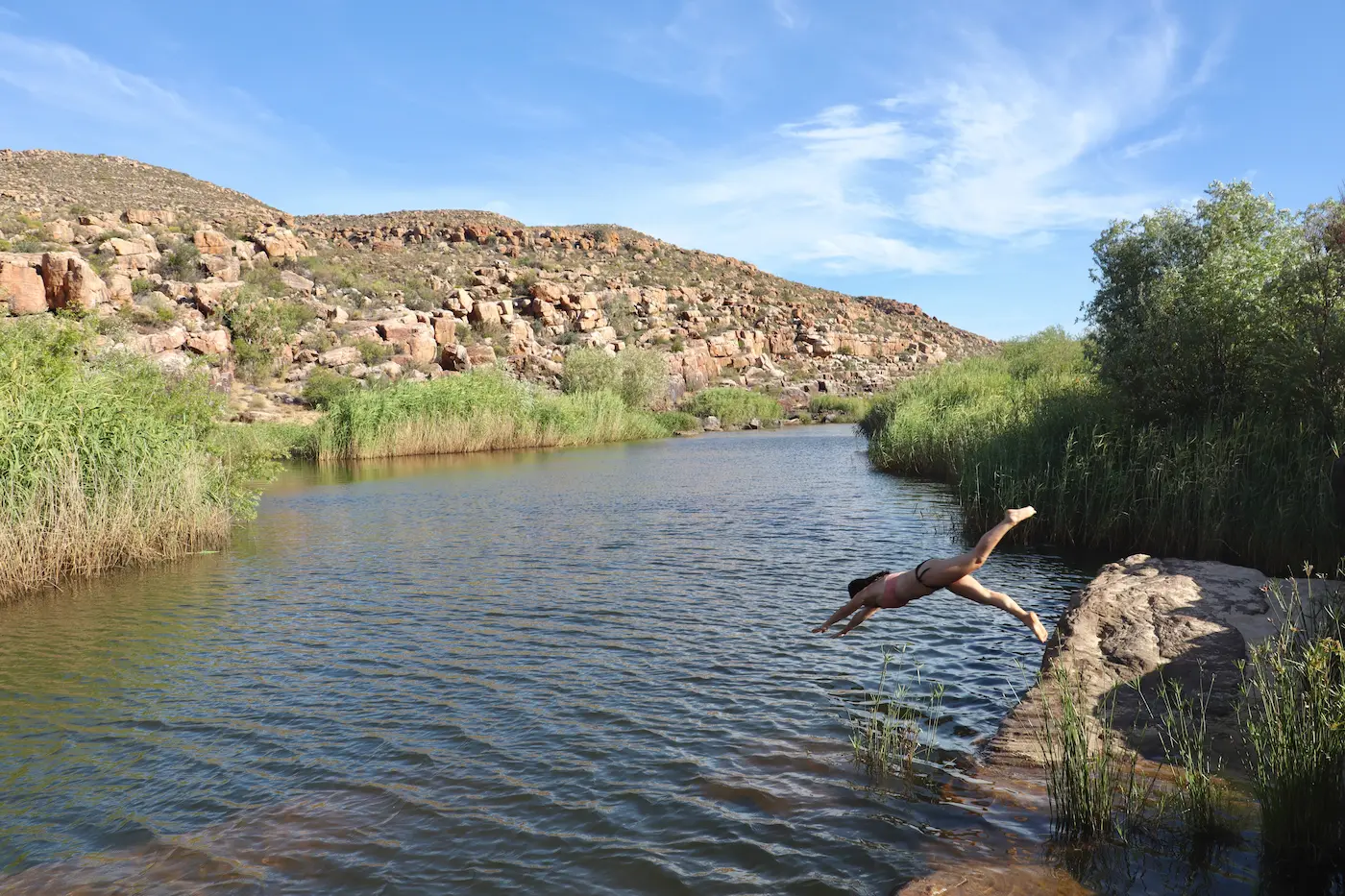
Rest & Thrive is built around that one stubborn fact, that you cannot detach by deciding to, only by being somewhere the work is unable to follow. It is a few days in the Cederberg, about three hours from the city and out of range of any signal. The absence of signal is the active ingredient.
We will not promise you come back changed but what a few days off the grid can do is well evidenced. They give the nervous system one thing it has not had in years, the break from chasing deadlines, imaginary lions and problem solving. Most people do not realise how long it had been since they had this break. Most guests find themselves napping twice a day, sleeping deeply at night, and noticing muscles they didn’t know were braced.
Common questions
Why can’t I relax even on holiday?
Because relaxing is mental, not geographic. Recovery only begins once you psychologically detach from work. As long as you stay reachable and keep thinking about work, the body reads the threat as ongoing and never shifts into its recovery setting.
How long does it take to actually switch off?
Longer than a weekend. The stand-down is gradual, the first day is often the hardest, and for most people the mental reaching only quietens around the second or third day. This is why very short breaks tend to disappoint.