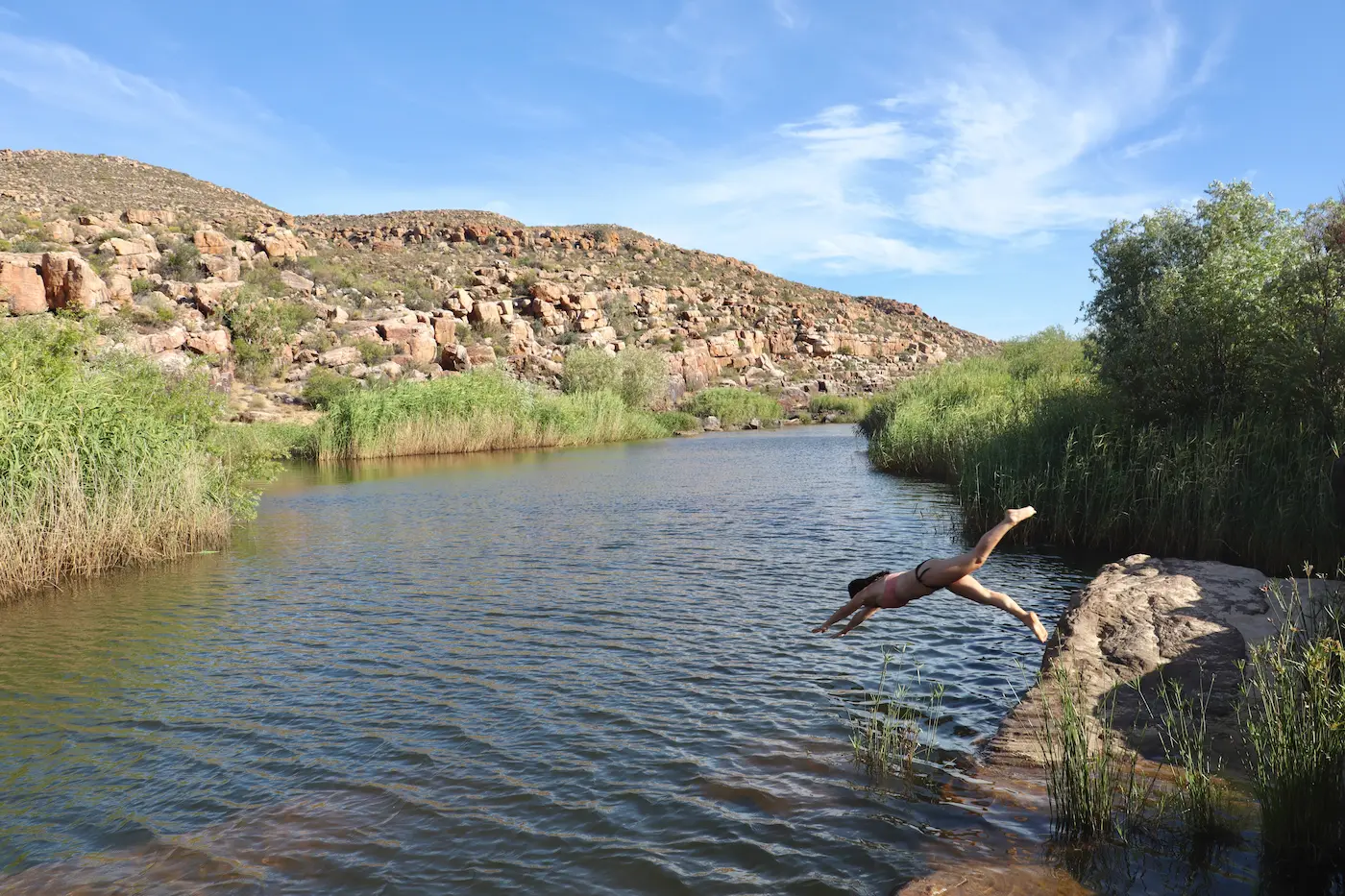

The first three months of the year went quickly, and what I remember of them is mostly small. Making cacao in the early dark. Sitting. Walking the dogs. Swimming in the river on the days the heat made the decision for me. Those were the anchors, and around them, the retreat.
People imagine that running a retreat is calm work, and some days it is. Most days it is an ordinary business in an extraordinary place: rooms to prepare, questions to answer, ten guests arriving with different needs and different weather in them, the practical and the human taking turns at the front of the queue. A morning can begin in complete stillness and be a frenzy by ten. The place doesn’t produce the pace. I do, and that is the uncomfortable, useful part.
The empty boat
There is a story from Zhuangzi that I keep coming back to. A man is crossing a river when another boat knocks into his. He wheels around, ready to shout at the other rower, and sees the boat is empty. It has simply drifted loose. The collision is identical either way, but the anger has nobody to land on, so it dissolves, and the man is left looking at what the anger actually was: something he brought to the bump, not something the bump contained.
Most of the collisions in a working day are empty boats. The interruption, the delay, the thing not done the way I would have done it. When the frenzy starts, I try to ask whether anyone is actually rowing at me. Usually not.
So I keep choosing the slower speed, on purpose, in a world that treats speed as the default proof of seriousness. It is the same premise the whole place runs on, and the same one Rest & Thrive hands to guests: that walking pace is not a lapse from real life but roughly the speed at which a life can be noticed.