The indoor life
Consider the shape of an ordinary day. Home to car, car to office, office to shop, shop to home. Perhaps a gym afterwards, windowless, a screen above every machine. Researchers estimate that adults in industrialised countries now spend around 90 per cent of their time indoors, which means nature has become, for most of us, something watched rather than entered. A documentary. A screensaver. A view from the motorway.
The strange part is how much we know about what we are missing. We can name endangered species on other continents but not the flowers growing through the pavement outside. Few of us could tell St John’s wort from chamomile, or say what is edible in the nearest patch of woodland, or light a fire without a firelighter. Richard Louv, writing about children, called the result nature-deficit disorder: the fatigue, irritability and flattened attention that follow when a species built for the outdoors arranges its entire life inside. It was never only about children.
What the research says about nature and wellbeing
The evidence here is unusually consistent. In 2019, researchers at the University of Exeter analysed data from nearly 20,000 people in England and found that those who spent at least two hours a week in natural settings were significantly more likely to report good health and high wellbeing than those who spent no time in nature at all. It did not matter whether the two hours came in one long walk or in scraps across the week. Below the threshold, the effect disappeared.
Work led by Richard Ryan at the University of Rochester points the same way. Across a series of studies, his team found that time outdoors reliably increased people’s sense of vitality, an effect that held even after accounting for exercise and social contact. Being outside was doing something on its own.
The physiology is measurable. Yoshifumi Miyazaki at Chiba University in Japan has spent decades recording what happens to the body in forests: heart rate settles, blood pressure drops, and salivary cortisol, the stress hormone, falls by 13.4 per cent after twenty minutes spent simply looking at a forested landscape.
An older connection
None of this would have surprised the Greeks. Antaeus, son of the earth goddess Gaia, was unbeatable in a wrestling match for as long as his feet touched the ground. Hercules worked out the secret, lifted him into the air and held him there until his strength drained away. It is a story about wrestling. It is also a story about what happens to creatures separated from the thing that made them.
The biologist Edward O. Wilson gave the idea a modern name. Biophilia, he argued, is an inherited pull toward other living things, written into us by the three and a half billion years we share with everything else alive. The affinity is older than culture, and it does not switch off because we stopped using it.
Landscapes big enough to be indifferent
Something particular happens in nature at scale, in places large and old enough to be entirely indifferent to you. Under a sky crowded with stars, beside rock formations that predate the species, the mind’s usual material has nothing to grip. There is no room in genuine awe for rumination, and no need in it for effort. Body, mind and surroundings stop presenting themselves as separate problems.
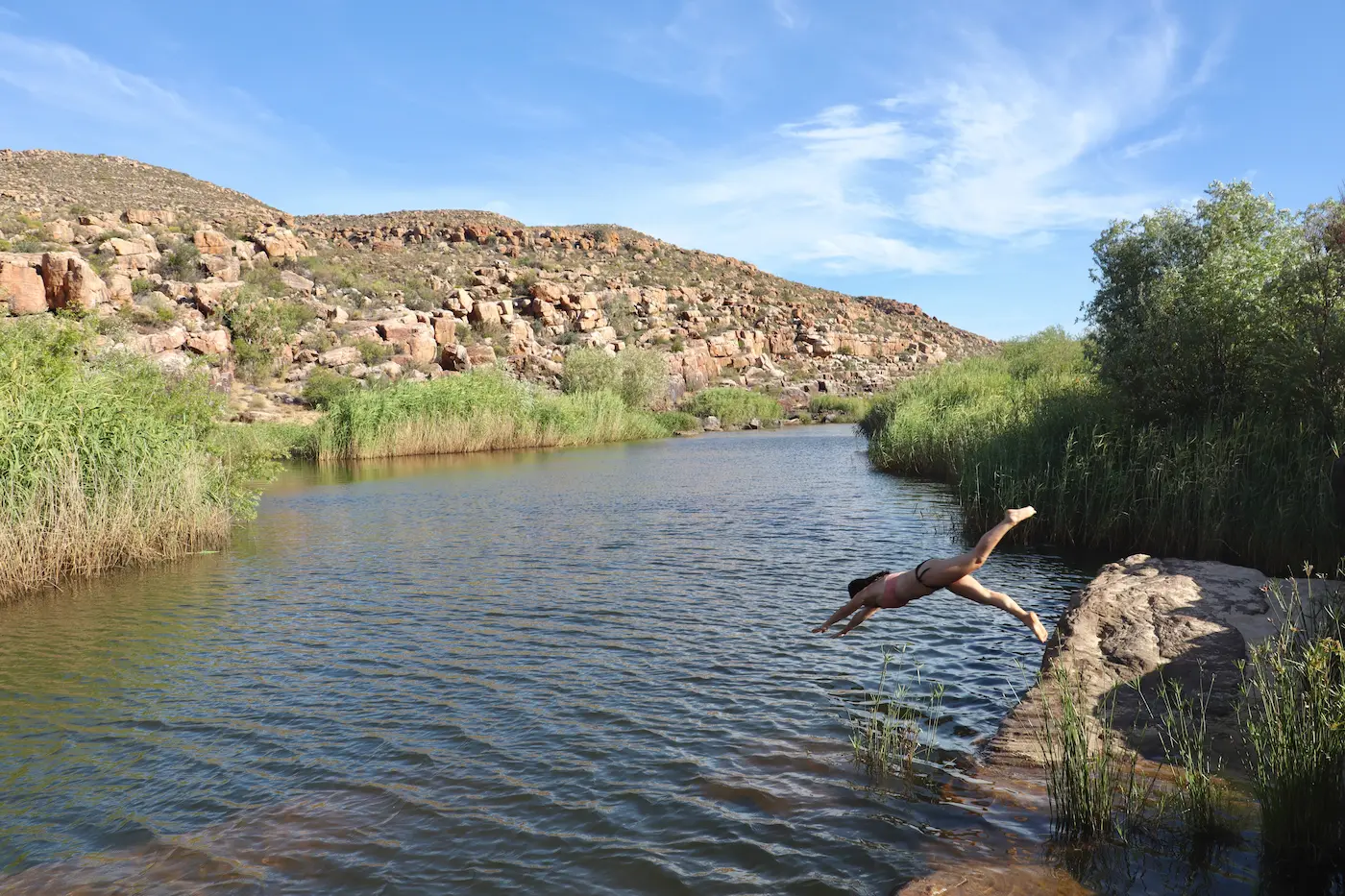
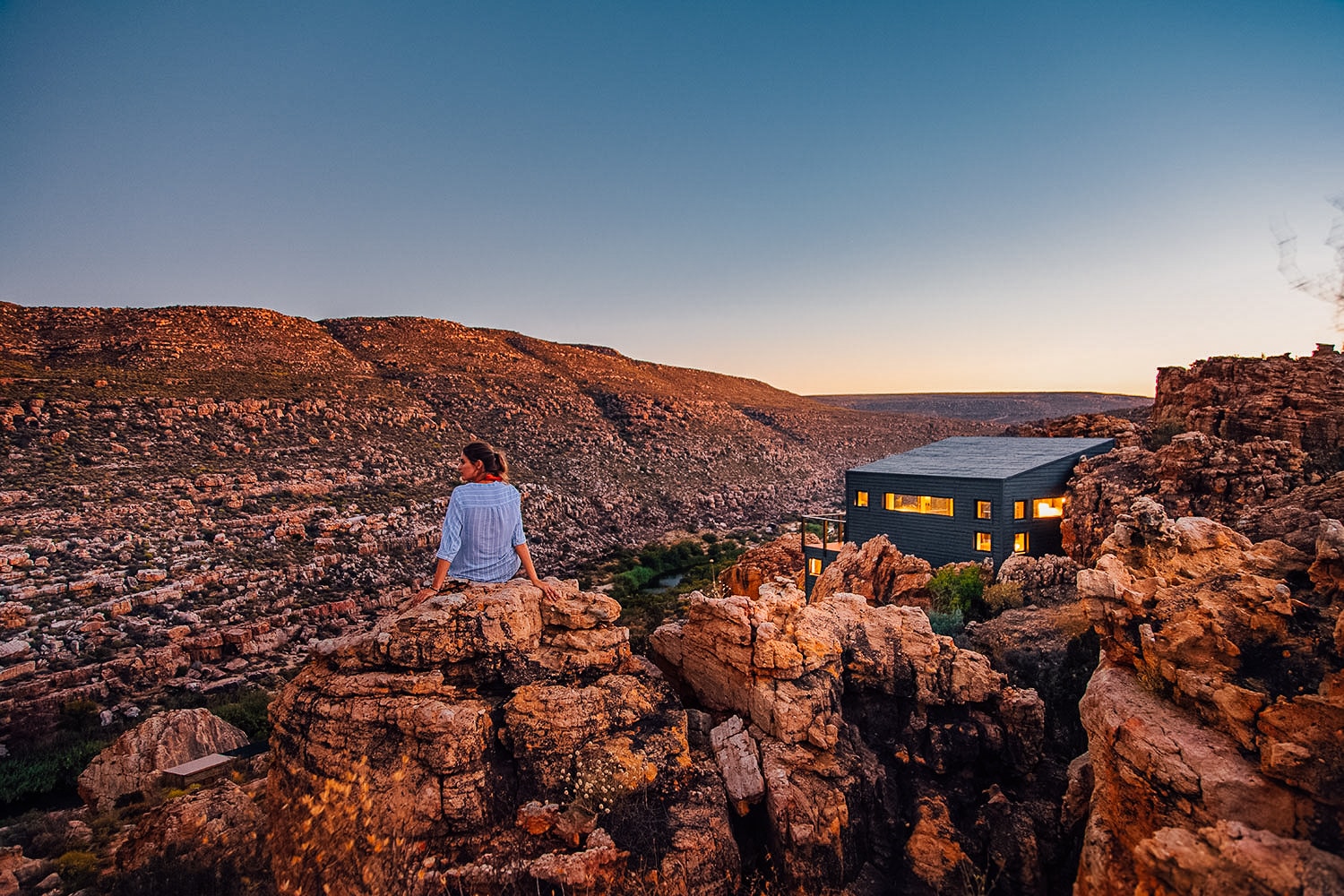
This is the country Bliss & Stars sits in. The Cederberg is hard, dry and definitely not manicured, 1,350 hectares of it without phone signal, and unhurried time inside that is most of the argument behind Rest & Thrive, three nights built around doing very little.
“A culture disconnected from the wild nature becomes insane”- Toby Hemenway