

Meditation Isn’t About Stopping Your Thoughts

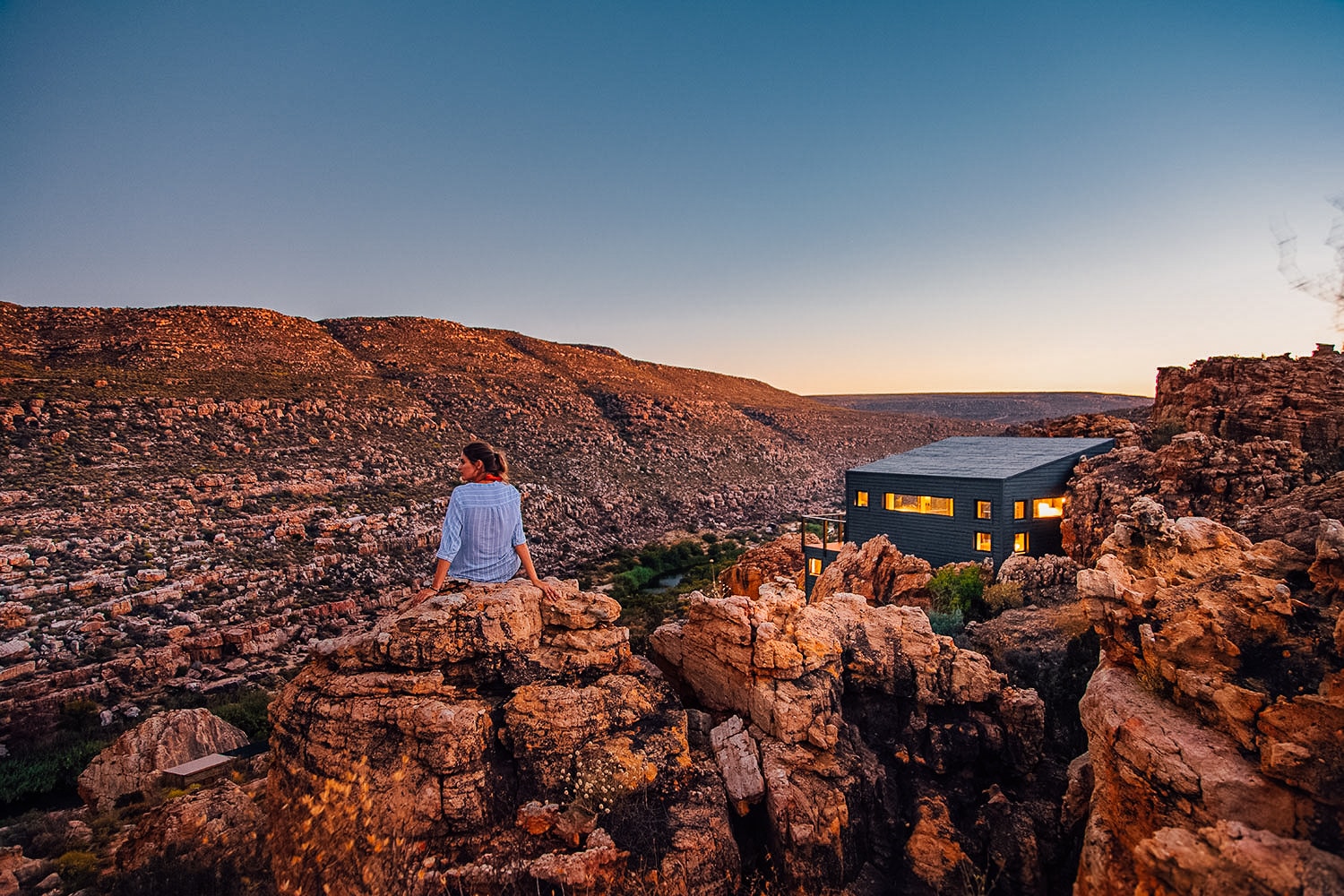
Daria Rasmussen - silent retreat at Bliss and Stars, Cederberg, South Africa

There are people who has decided, with lots of confidence, that meditation is not for them. They have usually tried it once. They sat down, closed their eyes, and within about forty seconds found themselves drafting an email, relitigating a conversation from 2019, or wondering whether they turned the stove off. They concluded, reasonably, that they had failed at it, and that the failure said something permanent about their wiring. 
This is the most common reason people give for not meditating, and it rests on a misunderstanding so widespread it has become the default. The belief is that meditation means stopping your thoughts. That somewhere out there are calm, evolved people whose minds go silent on command, and that you, with your forty seconds and your stove, are simply not one of them.
Nobody’s mind goes silent on command. That was never the thing.

The restless mind is not a personal failing
The mind does not want to be still. It was not built to be still. Left to itself it produces thought the way the body produces heat, continuously and without being asked, and most of that thought is repetitive, unfinished, and faintly anxious. You did not break it with your phone, though the phone has not helped. The restlessness is older than that. Contemplatives noticed it thousands of years ago and described it in the same exasperated terms people use now, comparing the untrained mind to a drunk monkey, or a horse that has never been ridden, or a room full of people all talking at once.
So when you sit down and your mind immediately starts its noise, you are not doing it wrong. You are encountering the thing as it actually is, possibly for the first time, because most of the day you are too occupied to notice the noise is even running. The noise is always running. Meditation just turns down everything around it so you can finally hear it.

You cannot stop the waves
There is a line from the meditation teacher Jon Kabat-Zinn that gets repeated in this context: you cannot stop the waves, but you can learn to surf.
The point of sitting is not to flatten the ocean. The ocean does not flatten. The point is to stop being surprised every time a wave arrives, and to stop treating each one as evidence that you have failed. The thought comes, you notice it has come, you return your attention to wherever you had it before. The thought comes again, you notice again, you return again. That return, done quietly and without self-recrimination, repeated more times than you can count, is not the warm-up. It is the entire practice. There is nothing else hiding behind it.
People who have done this for years still have busy minds. What they have is a different relationship to the busyness. They have stopped believing every thought is an instruction. They notice the mind reaching for the pleasant thing and bracing against the unpleasant one, and they have learned that both are just weather, and that weather passes whether or not you grip it. This is a quietly useful thing to know at eleven at night when the mind has decided to review your entire professional life.

Start small
The other reason people abandon meditation is that they begin with an ambition wildly out of proportion to the act. They decide they will sit for thirty minutes, fail at twenty-five of them, and quit.
Five minutes is enough to begin. Genuinely enough, not a consolation prize. Five minutes a day, the same five minutes, sat through whether or not it goes well, will do more than an occasional heroic hour. The duration extends on its own once the habit stops feeling like a negotiation, and not before.
If you want something to actually do, the simplest version is the oldest one. Sit with a reasonably straight back, on a chair or the floor, whichever you will actually return to tomorrow. Let the eyes close or rest half-open and unfocused. Find your breath without changing it, and just follow it, in and out. Count if it helps, one on the exhale, up to ten, then start again at one. When you notice the mind has wandered off into planning or rehearsing or remembering, and you will notice this constantly, bring it back to the breath. That noticing and returning is the repetition that does the work. You are not failing each time you wander. The wandering and the returning are the same muscle.

Where the silence stops being a technique
Five minutes at your kitchen table is one thing. Days of it, somewhere with no signal and nothing asking for you, is another order of experience entirely, and not because anything mystical happens. It is just that the noise around you finally drops low enough, and stays low enough, for long enough, that the noise inside has nowhere to hide. Most people find that uncomfortable for about two days. What comes after the discomfort is the part that is difficult to describe to anyone who hasn’t sat in it.

Rest & Thrive is built around that drop in volume. No phone signal, a maximum of ten guests, 1,350 hectares of the Cederberg doing the work that no amount of instruction can. You do not need to arrive knowing how to meditate. The restless mind you would bring with you is the only qualification, and you already have that.

The waves were always going to keep coming. You were never meant to stop them.

The Strange Magic of 3-Day Retreat

A person sits alone on a rock ledge at golden sunset, overlooking a river winding through the Cederberg mountains

Still tired after your weekend away? You packed the bag. Switched off the phone. Got out of town. But you came back… still wired,foggy, and not rested. There’s a reason for that, and it isn’t because you didn’t meditate hard enough or drink enough green juice. It’s because your nervous system doesn’t operate on your schedule.

There’s something that happens consistently and predictably after about 72 hours in nature. You stop bracing and you begin to feel, if not transformed, then at least less scrambled. This is what researchers call the Three-Day Effect. At Bliss & Stars, we just call it a retreat.

David Strayer, a cognitive neuroscientist at the University of Utah, has spent years studying what happens to the brain when we step away from screens and into the wild. In one of his most cited studies, participants who spent four days in nature without digital devices showed a 47% improvement in creative problem-solving tasks. Not because they were trying harder—but because their prefrontal cortex was finally getting a break. The part of your brain responsible for decision-making, focus, and impulse control calms down when it’s no longer being asked to juggle ten things at once. Your attention softens as you stop doing. And slowly awareness, maybe even insight begins to move in.

On day one, you arrive. Technically, you’re in the mountains. But mentally, you’re still in your inbox. You’re wondering if you packed your charger, whether that email got sent, whether someone noticed your “Out of Office”. You haven’t landed yet.

On day two, things begin to fall away. There is no Wifi signal and you notice the shape of a rock, the movement of water, the silence between words. You can just be and for once, that feels like enough.

Then comes day three. And on day three, you remember. You remember what it feels like not to rush. You remember what clarity tastes like. You remember that not every thought requires a response, and not every feeling is a crisis.

Strayer’s research supports what environmental psychologists Rachel and Stephen Kaplan have long said: nature offers “soft fascination”—stimuli that gently hold your attention without draining it. Unlike city streets or inboxes, which demand constant vigilance, the natural world invites your brain to downshift. And when that happens, stress hormones drop. Sleep deepens. Creativity rebounds. Not because you hacked your mind, but because you stopped feeding it junk.

This isn’t a productivity trick. Though, in a way, it works better than one. The 3-Day Effect doesn’t promise transformation. It promises a pause. A little space. The chance to feel time instead of chase it. To listen instead of react. To exhale.

That’s why our retreats aren’t designed to promise you a life-changing experience in 24 hours. They’re designed to give you what your nervous system actually needs: enough time to stop pretending everything’s fine, long enough to notice what might be.

You could call it a reset. But we prefer to think of it as a return.

Resources:

Nature Nurtures Creativity”

This article discusses a study co-authored by Strayer, highlighting how immersion in nature can enhance creative problem-solving by 50%.

“Call to the Wild: This Is Your Brain on Nature”

This piece delves into Strayer’s research and experiences, illustrating the cognitive benefits of spending time in natural environments.

“The Nature Fix: The Three-Day Effect”

This blog post explores the concept of the Three-Day Effect, featuring insights from Strayer and others on the restorative power of nature.

Six Steps to Get Unstuck from Stress

woman stuck in the cage trying to get out

We all experience survival mode at times, when everything feels like death or life situation. You’re on high alert all day, reacting to life rather than living it, and often you don’t notice, because it has quietly become the default setting. The mind races and the body braces.

Getting out from this state doesn’t mean the external chaos disappears. It means you stop running from it long enough to deal with it. Six things help, in roughly this order.

1. Slow down. This is the hardest step and it comes first anyway. Everything in a stressed system says speed up, and the way out is the opposite direction. Pause somewhere in the day, on purpose. Breathe slower than feels natural for a minute. It will feel unproductive. That feeling is the survival mode talking, not the truth.

2. Come back to the body. Stress pulls everything up into the head, into the loop of thoughts and worries and planning. Interrupt it from below. Feel your feet on the floor. Let the shoulders drop; they were probably up near your ears. Notice the breath without fixing it. This sounds too small to matter. It’s the reason it works: small enough that a system on high alert will actually allow it.

3. Stay in the present tense. Survival mode lives in the past and the future, replaying what went wrong and rehearsing what might. Neither is a place you can act. A walk outside, a few minutes of noticing what’s around you, anything that returns attention to now, gives you back the only ground where anything can actually be done.

4. Admit what’s hard, and notice what isn’t. Some of what you’re carrying is genuinely heavy, and pretending otherwise feeds the state you’re trying to leave. Say what’s hard, to yourself or someone else. Then, alongside it, watch for the small good moments, the ones the polyvagal therapist Deb Dana calls glimmers: sun on a wall, a decent coffee, a text from someone kind. They don’t cancel the hard things. They remind the nervous system that hard is not the whole picture.

5. Sort what you control from what you don’t. Survival mode grows out of the feeling that everything is out of your hands. It never all is. Your reactions, some of your choices, parts of your environment, these remain yours. Put your effort there and let the rest be the weather.

6. Borrow stability from outside. When the inside feels shaky, anchor to things that aren’t: a walk in real nature, movement, a proper conversation, making something with your hands, play. These regulate the nervous system from the outside in, which on the worst days is the only direction available.

None of this removes the chaos. What it does is change your position in it, from hunted to standing. Survival mode is a reaction, not a personality, and reactions end when the system gets convinced it’s safe enough to stand down. Sometimes that takes more than a list, which is what private sessions are for. Often it starts with the first step, done badly, today.

Somatic Experiencing for Stress Relief and Nervous System Reset

woman smelling a blooming cherry tree

People often arrive at a first session expecting to talk about the past, which is reasonable, because that is what most therapy looks like from the outside. In Somatic Experiencing we mostly leave the story alone, at least at first. We start with what the body is doing right now, in the chair, in this room: where the breath catches, how the shoulders sit, what happens in the chest when a certain subject comes near. The body keeps a very accurate record. It just doesn’t keep it in words.

The idea behind it

Somatic Experiencing was developed by Peter Levine, and it rests on a fairly simple observation. When something overwhelms us, the body mobilises to deal with it: to fight, to run, to brace. If that mobilisation gets to complete itself, the system settles afterwards. Often it doesn’t, because the event was too big or too fast, or because we had to hold still and cope, and so the charge stays in the system. Years later it shows up as tension no massage quite reaches, a breath that never gets all the way down, a body behaving as if the danger were still current.

The work is giving the nervous system a chance to finish what it started, in very small doses, rather than analysing what happened. In a session I might ask you to notice a sensation, stay with it briefly, then move attention to somewhere in the body that feels neutral or even pleasant, and back again. Small amounts, with recovery in between. It sounds almost too gentle to do anything, and the gentleness is deliberate: a system that was once overwhelmed is not helped by being overwhelmed again.

What it is not

Talking happens, but this is not talk therapy, and you don’t need to retell what happened to you. For some people that alone is the main relief. Catharsis is not the goal either; big dramatic releases usually mean it is time to slow down. And I want to be straightforward about the evidence. The research on SE is younger than the method, and the early controlled studies show promise, particularly for post-traumatic stress, which is exactly what they show: promise. It is a serious modality rather than a miracle, and it works alongside medical or psychological care, not instead of it. If you are in crisis, the right first stop is a doctor or therapist. SE can join later.

What people tend to notice

Change here is usually quiet. Clients report sleeping better, breathing lower in the body, being less braced in situations that used to set them off. Sometimes the neck tension that seemed structural turns out to have been vigilance, and it eases when the vigilance does. I am careful with promises, because bodies differ and histories differ. What I can say is that most people are surprised that something this unhurried does anything at all, and then surprised again by how much.

I work with people in private sessions, in person in Cape Town and online. Sessions are slow on purpose. 

How to Anchor Yourself Here and Now When the Emotions and Thoughts are Running Wild

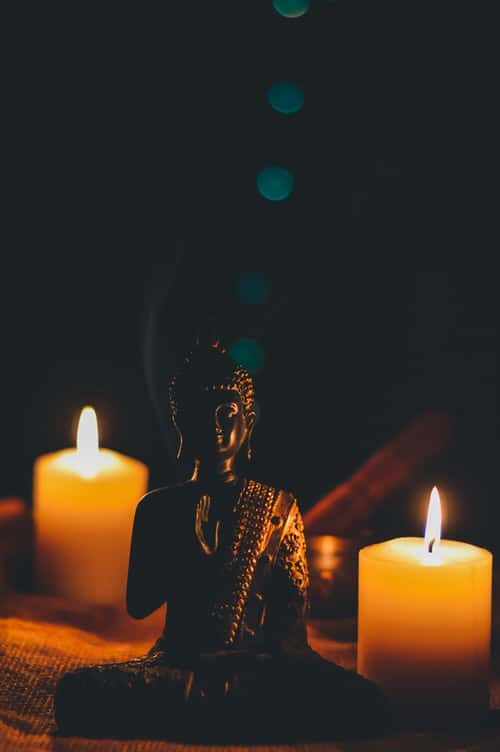
buddha statue next to the candles

The mind tends to look forward. You are here and now, but the mind is already planning for next week, maybe even next year, and it plays the role of a storyteller, some of whose most convincing work is dark. The trouble is that the body cannot reliably tell a vividly imagined scenario from a real one. Merely picturing the black scenario, your pulse accelerates and the stress hormones arrive, exactly as if it were happening. You can be flooded by an event that is not happening, has not happened, and may never happen.
When thoughts start galloping dangerously fast and emotions take over, what helps is anchoring attention in the here and now, because the moment you are actually in is the most certain thing available. The exercise below has saved me multiple times and still does. It takes about two minutes and can be done anywhere, with eyes open, in the middle of an ordinary day.

The exercise

What do I see. Look around and notice five random things in your surroundings, labelling each one quietly in your mind: there is a table, there is a book. Notice them and let them go.

What do I hear. Take a moment and notice three sounds, one at a time: birds outside, the floor creaking, traffic somewhere. Name them and let them go.

What do I feel. Bring attention into the body and notice five physical sensations: my eye is itching, my heart is pounding, my feet are on the floor. Name each one and let it go.

Then let attention flow freely between what you see, hear and feel, without clinging to anything, without grasping. Just notice what arises, moment by moment.

Why something this simple works
Attention is a narrow channel. While it is occupied with the actual room, there is less bandwidth left for the story, and the story is what was producing the flood. The quiet naming matters too: putting plain words to what you notice seems to take some of the heat out of it, an effect psychologists call affect labelling. And the senses have one advantage over every other anchor, which is that they only ever report from the present. The body cannot see next week.
This is a small cousin of the orienting work I use in somatic sessions, where the same principle is taken much further. But the two-minute version needs no preparation. It works in a meeting, in a car park, in a queue.

The mind will wander back to its storytelling within minutes, and that is fine. The exercise was never going to stop the storyteller. It is for remembering what is here.

Download and save the simple guide to grounding.

Yoga Nidra | How to Stay Sane and Deeply Relax

woman with eye mask on her eyes during yoga nidra practice

Yoga Nidra asks you to lie down, stay awake, and do nothing. Of the three instructions, the doing nothing is the difficult one.

What yoga nidra is

The name translates roughly as yogic sleep, which is slightly misleading, because the point is the narrow territory between waking and sleeping rather than sleep itself. In practice it is guided: you lie down, usually for twenty to forty-five minutes, while a voice moves your attention slowly through the body, the breath, and whatever sensation is present. The body drops into something close to deep rest while awareness stays lit. The modern form was systematised in the 1960s by Satyananda Saraswati. Lately the productivity world has rebranded it as non-sleep deep rest, which says more about the productivity world than about the practice.

It is not an escape from responsibility or the world. It is closer to the opposite: a method for meeting what is actually going on in the body once the day’s noise is taken away.

The first weeks

My own introduction was not graceful. In the beginning I simply fell asleep, and would surface to the instructor announcing the end of the class with no idea where I had been for half an hour. Then, after the first week, my chest went tight. I was lying comfortably, doing nothing at all, and something in me hurt. I wanted an explanation and I wanted a fix. My teacher offered neither. Relax, just be, observe.

A few weeks later the tightness left on its own. My breath deepened. I felt lighter, and none of it had required my analysis, which was the lesson. The body did the work once I stopped supervising it. The more tightly we grip a pain, physical or otherwise, the more of ourselves we wrap around it. Loosened, things move.

Why doing nothing is difficult

Most of us push all day and call it normal. We plan, improve, optimise, and dream about doing nothing, and then when a genuine gap opens, we panic and fill it. Yoga Nidra removes the option of filling it. What remains is a meeting with yourself, and the meeting is not always comfortable, which is precisely why the practice earns its keep. Discomfort that surfaces in stillness was already there. Stillness just stopped outrunning it.

Practising it

Lying down is correct here, and falling asleep is not failure; it usually means the body took what it needed. A quiet floor, a blanket, and a guided recording are the entire requirement; a yoga Nidra practice can be dowloaded here if you want a voice to follow.

How Being Immersed in Nature Benefits Your Wellbeing

serene nature at bliss and stars
“Mindful contact with the natural environment allows us to discover ourselves, reconnect with our roots. Mindfulness practice set in nature allows us to observe playing wild animals, clouds passing through the sky, river flowing, or a dead bird, and bring us to realize that everything that happens with nature is reflected in our bodies and minds. We are able to recognize this mind-body-nature identity and reestablish the connection with nature.” – Daria Rasmussen, Bliss & Stars Co-founder”,

The indoor life

Consider the shape of an ordinary day. Home to car, car to office, office to shop, shop to home. Perhaps a gym afterwards, windowless, a screen above every machine. Researchers estimate that adults in industrialised countries now spend around 90 per cent of their time indoors, which means nature has become, for most of us, something watched rather than entered. A documentary. A screensaver. A view from the motorway.

The strange part is how much we know about what we are missing. We can name endangered species on other continents but not the flowers growing through the pavement outside. Few of us could tell St John’s wort from chamomile, or say what is edible in the nearest patch of woodland, or light a fire without a firelighter. Richard Louv, writing about children, called the result nature-deficit disorder: the fatigue, irritability and flattened attention that follow when a species built for the outdoors arranges its entire life inside. It was never only about children.

What the research says about nature and wellbeing

The evidence here is unusually consistent. In 2019, researchers at the University of Exeter analysed data from nearly 20,000 people in England and found that those who spent at least two hours a week in natural settings were significantly more likely to report good health and high wellbeing than those who spent no time in nature at all. It did not matter whether the two hours came in one long walk or in scraps across the week. Below the threshold, the effect disappeared.

Work led by Richard Ryan at the University of Rochester points the same way. Across a series of studies, his team found that time outdoors reliably increased people’s sense of vitality, an effect that held even after accounting for exercise and social contact. Being outside was doing something on its own.

The physiology is measurable. Yoshifumi Miyazaki at Chiba University in Japan has spent decades recording what happens to the body in forests: heart rate settles, blood pressure drops, and salivary cortisol, the stress hormone, falls by 13.4 per cent after twenty minutes spent simply looking at a forested landscape.

An older connection

None of this would have surprised the Greeks. Antaeus, son of the earth goddess Gaia, was unbeatable in a wrestling match for as long as his feet touched the ground. Hercules worked out the secret, lifted him into the air and held him there until his strength drained away. It is a story about wrestling. It is also a story about what happens to creatures separated from the thing that made them.

The biologist Edward O. Wilson gave the idea a modern name. Biophilia, he argued, is an inherited pull toward other living things, written into us by the three and a half billion years we share with everything else alive. The affinity is older than culture, and it does not switch off because we stopped using it.

Landscapes big enough to be indifferent

Something particular happens in nature at scale, in places large and old enough to be entirely indifferent to you. Under a sky crowded with stars, beside rock formations that predate the species, the mind’s usual material has nothing to grip. There is no room in genuine awe for rumination, and no need in it for effort. Body, mind and surroundings stop presenting themselves as separate problems.

This is the country Bliss & Stars sits in. The Cederberg is hard, dry and definitely not manicured, 1,350 hectares of it without phone signal, and unhurried time inside that is most of the argument behind Rest & Thrive, three nights built around doing very little. 


“A culture disconnected from the wild nature becomes insane”- Toby Hemenway

References:
Richard Louv, Last Child in the Woods, 2005
Edward O. Wilson, Biophilia: The Human Bond with Other Species, 1984