A Guide to Meteor Showers in South Africa
Standing still is an illusion of scale. The ground under you is moving around the sun at roughly 107,000 kilometres an hour, and it never travels the same road twice without consequences. Comets are untidy travellers. They shed dust as they go, and the dust stays out there, strung along the orbit like litter on a highway. A meteor shower is what it looks like from the ground when the planet drives through it. We are all travellers. Most of the year we simply cannot see the road.
What a shooting star actually is
Almost nothing, which is the surprising part. A typical meteor is a fleck of comet dust smaller than a grain of rice, hitting the upper atmosphere at tens of kilometres per second and burning out in under a second, roughly 80 to 100 kilometres above your head. Nothing falls. Nothing lands. What you see is friction, briefly, at the edge of space.
Because the dust trails sit in fixed orbits, Earth crosses each one at the same point in its lap every year. That is why meteor showers keep a calendar, and why they are named for the constellation the streaks appear to radiate from.
Which meteor showers are visible from South Africa
The famous Perseids of every northern-hemisphere August barely clear the horizon here, which the international coverage rarely mentions. The south keeps its own calendar, and it is a good one. The Eta Aquariids arrive in early May, debris from Halley’s Comet, and favour southern skies in particular. The Southern Delta Aquariids follow in late July. The Orionids in October are Halley’s dust met from the other side of its orbit. And the Geminids in mid-December are the most generous shower of the year, capable of producing upward of a hundred meteors an hour under genuinely dark skies. The Geminids are also the odd ones out: their parent is not a comet but an asteroid, 3200 Phaethon, still shedding after all these laps.
How to watch
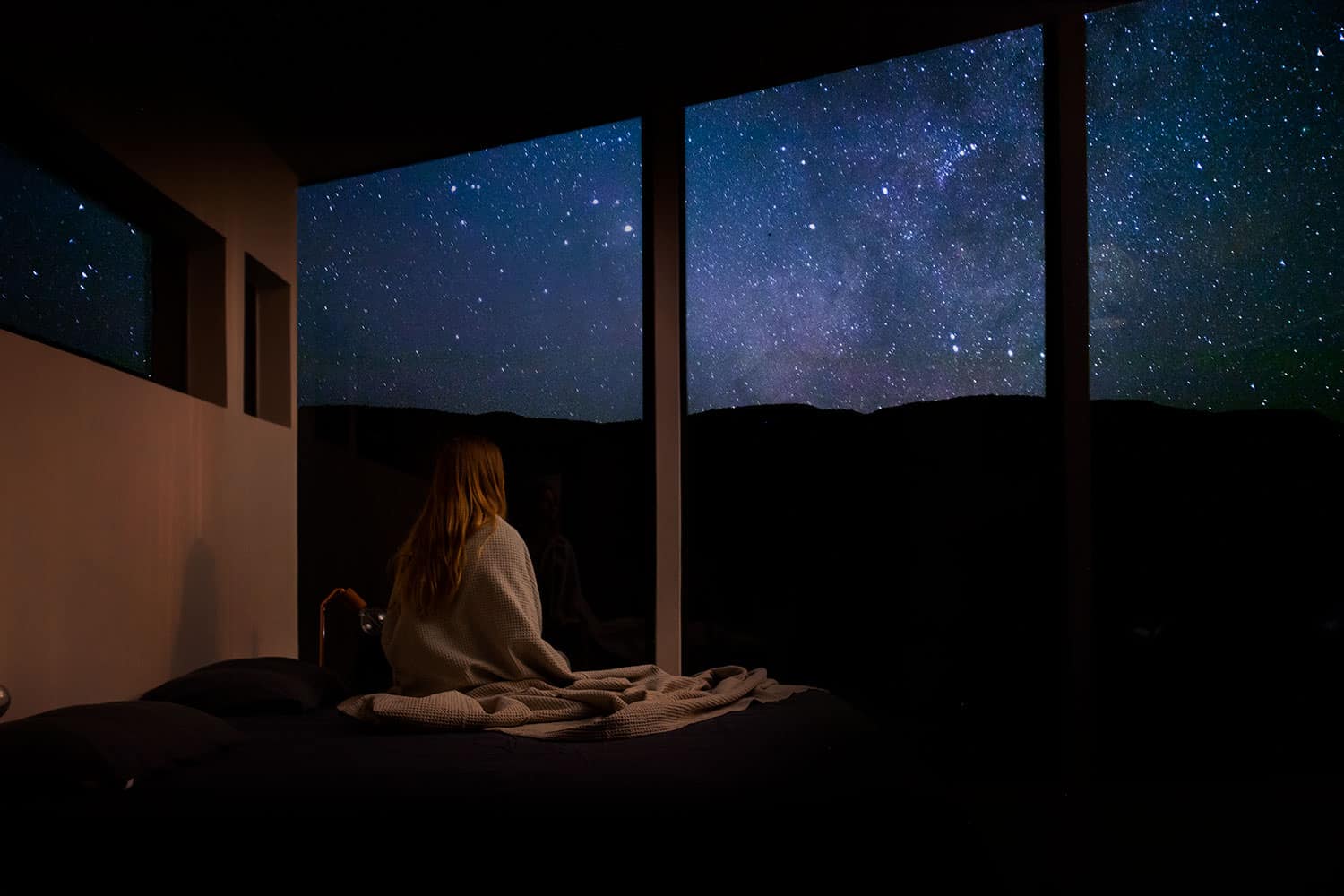
A telescope is the one thing you should not bring. Meteors cross wide stretches of sky and the naked eye is the correct instrument. What matters instead is darkness, and this is where most attempts fail: from a lit suburb, a hundred-an-hour shower dwindles to a handful. Get somewhere genuinely dark, go after midnight when your side of the planet faces into the oncoming dust, avoid the full moon, and give your eyes twenty minutes to adjust. Then lie back and wait. Winter Geminids reward blankets.
The Cederberg’s skies are among the darkest in the country, which is why Bliss & Stars sits under them and why Orion’s Odyssey is spent mostly looking up. But a shower asks for nothing except darkness and patience.
Each streak is the planet meeting something it left behind on an earlier lap. Nothing up there is falling. Everything, including the ground you are lying on, is in motion.